NHC SF Member Blog: Support on Their Terms
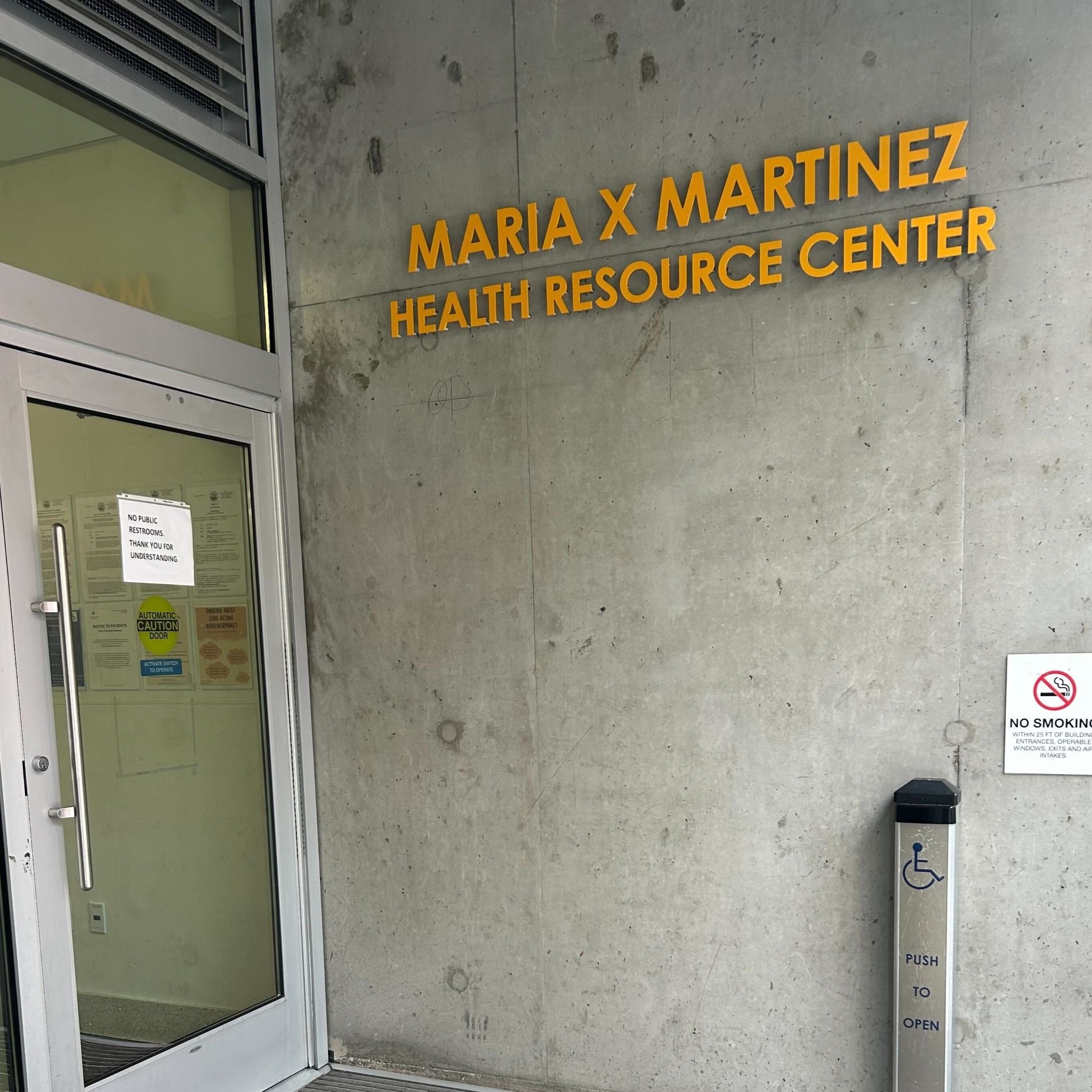
My name is Jack, and I am currently serving as a Substance Use Coordinator with the San Francisco Department of Public Health’s Whole Person Integrated Care (WPIC) division. Serving primarily at a low-barrier primary care clinic, Maria X Martinez, I support people who are living with opioid and stimulant disorders through education, navigation, and connection with social and medical services. While my day-to-day responsibilities vary, I want to highlight one part of my service that has been especially meaningful and rewarding.
One of my main roles is to help facilitate a contingency management program, which uses positive reinforcement to support people who are looking to change their relationship with stimulants. Twice a week, our cohort of participants meets in a group room that functions both as a waiting space for one-on-one check-ins with a doctor or social worker and as a space to build community. To thank our participants for their arrival and engagement in our meetings, they receive a gift card, and are given an additional incentive if they elect to complete a urine toxicology test. Importantly, the latter is purely optional; our program operates under a harm reduction model, which means that our participants set their own goals and their own pace. While some come into the program aiming at complete abstinence, others are looking more to reduce their use, and we support both goals equally and non-judgmentally.
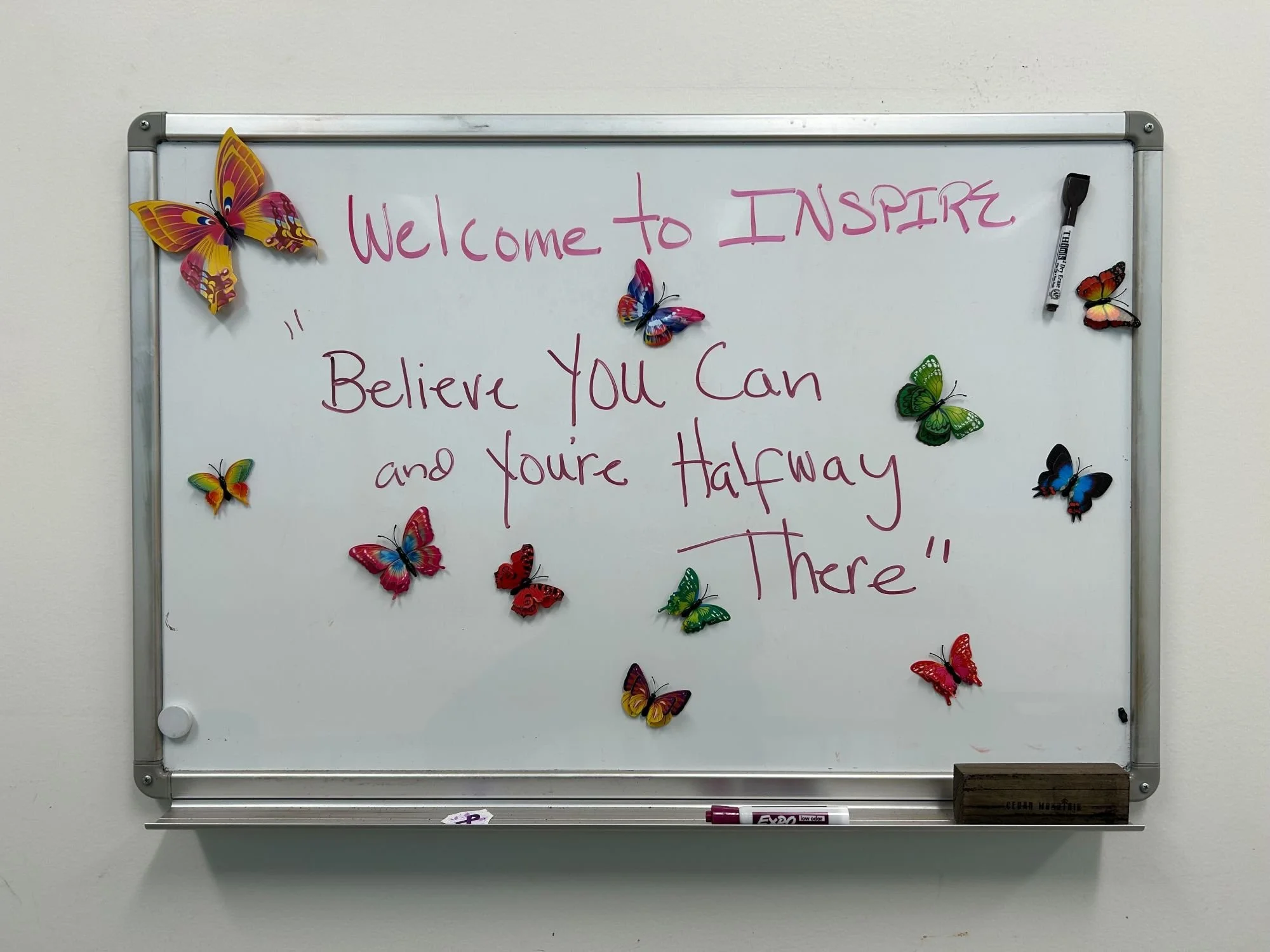
My favorite part of the program is the community. Spending two days per week together for twelve consecutive weeks, I’ve seen how many of our participants grow close and develop friendships that extend beyond the group room. Just recently, three of our participants came together to throw a “contingency management Christmas party” after they had jointly lamented spending the holidays alone. All three have since “graduated” from the program, but continue to spend time together and periodically drop into our weekly sessions just to say hello and mingle with the new cohort. Moments like these remind me that our program is about more than providing incentives or conducting health exams: it’s about opening space where people can begin to heal through community and the connection that we all crave and need.
A major project of my service term is to develop a separate program for our graduates, because almost without fail, at least one graduate shows up to every weekly session. While some come just to check in, others come because they continue to need support. One of the main drawbacks of contingency management is that it’s temporary, and for many, it can be challenging to maintain progress when the positive reinforcement and engagement with the community come to an end. The idea for a program that can address this barrier through ongoing support came not from us organizers, but from the graduates themselves, who consistently pitch us ideas whenever we see them in the clinic or out in the community. We hope to launch the first cohort within the next month, and I’m excited to see how our graduates continue to support each other and shape the program into something that meets their own self-defined needs.
About the Author
Jacob is one of the 2025-2026 NHC San Francisco Members. He is currently serving as a Substance Use Coordinator with the San Francisco Department of Public Health’s Whole Person Integrated Care Team.